
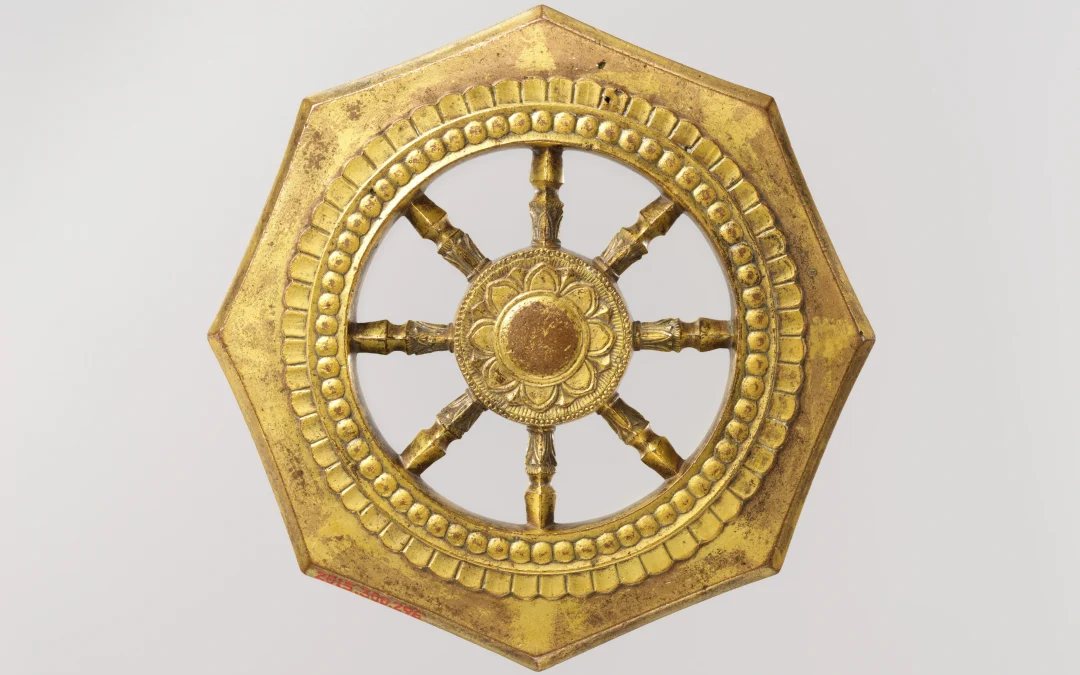
The Eightfold Path explained simply: it’s the practical heart of the Buddha’s teaching. Many people searching for peace and clarity in a chaotic world find Buddhism’s emphasis on ethics, mindfulness, and wisdom deeply appealing—but often struggle to understand how to apply it.
This article breaks down the Eightfold Path into clear, actionable steps. You’ll learn what each part means, how they connect, and how to integrate them into your daily life for greater awareness, compassion, and freedom from suffering.
What Is the Eightfold Path?
The Eightfold Path is the Buddha’s guide to liberation. After his enlightenment, he taught that suffering (dukkha) can be ended by following this path, which is the fourth of the Four Noble Truths.
It is not a linear sequence, but a set of eight interconnected principles that support one another. These are traditionally grouped into three categories:
- Wisdom (Panna): Right View, Right Intention
- Ethical Conduct (Sila): Right Speech, Right Action, Right Livelihood
- Mental Discipline (Samadhi): Right Effort, Right Mindfulness, Right Concentration
Let’s look at each of these eight elements in detail, exploring their meaning and practical application.
Right View (Samma Ditthi)
Right View means understanding reality clearly. It begins with recognizing the Four Noble Truths—that life involves suffering, suffering has causes, it can end, and there’s a path to that end.
This view is not about dogma. It’s about seeing things as they truly are—impermanent, interconnected, and not self. Cultivating Right View helps us act wisely and respond to life with understanding instead of reactivity.
Right Intention (Samma Sankappa)
Right Intention refers to the motivations behind our thoughts and actions. In Buddhism, intention is what gives karma its ethical weight.
The Buddha identified three kinds of skillful intention:
- Renunciation: Letting go of desire and clinging
- Non-ill will: Cultivating kindness instead of hatred
- Harmlessness: Wishing no harm to any being
Practicing Right Intention trains the mind to move from self-centered wants to compassionate clarity.
Right Speech (Samma Vaca)
Right Speech is the commitment to truthful, kind, and meaningful communication. Words can create connection or cause harm, depending on how they’re used.
The Buddha outlined four kinds of unwholesome speech to avoid:
- Lying
- Harsh or abusive speech
- Divisive speech (gossip)
- Idle chatter or meaningless talk
Right Speech encourages us to speak with honesty, care, and purpose—and to listen deeply as well.
Right Action (Samma Kammanta)
Right Action means behaving in ways that are ethical, non-harming, and aligned with compassion. It reflects our values in the choices we make.
It includes avoiding:
- Killing or harming living beings
- Stealing or taking what is not freely given
- Sexual misconduct
By living ethically, we create inner peace and social harmony, both essential for spiritual progress.
Right Livelihood (Samma Ajiva)
Right Livelihood means earning a living in a way that does not cause harm and ideally contributes to the well-being of others.
The Buddha discouraged livelihoods involving:
- Weapons and warfare
- Dealing in living beings (e.g., slavery, trafficking)
- Butchery or meat production
- Selling intoxicants or poisons
Right Livelihood invites us to align our work with our values and reflect on the broader impact of our economic choices.
Right Effort (Samma Vayama)
Right Effort is the energy we bring to our mental states. It means being proactive and consistent in cultivating wholesome qualities while letting go of unwholesome ones.
This includes four key practices:
- Preventing unwholesome states
- Abandoning unwholesome states that have arisen
- Developing wholesome states
- Maintaining and strengthening those states
Right Effort isn’t forceful striving—it’s wise, balanced energy applied with mindfulness.
Right Mindfulness (Samma Sati)
Right Mindfulness is the clear awareness of body, feelings, mind, and mental phenomena. It means observing experience in the present moment, without judgment or distraction.
Practicing mindfulness helps us:
- See our reactions more clearly
- Pause before acting
- Develop insight into impermanence and suffering
It is cultivated through formal meditation and brought into daily activities, creating a foundation for wisdom and peace.
Right Concentration (Samma Samadhi)
Right Concentration refers to deep states of meditative absorption known as jhānas. These states arise from sustained attention and serenity, allowing the mind to become focused and unified.
Benefits of Right Concentration include:
- Stabilizing the mind
- Reducing mental distractions
- Preparing the mind for insight (vipassanā)
It completes the Eightfold Path by enabling us to see reality with clarity, calm, and precision.
Why the Eightfold Path Still Matters Today
Understanding the Eightfold Path isn’t just about ancient philosophy—it’s about living with integrity and awareness in modern life. In a world dominated by speed, stress, and division, these eight steps offer a way to reconnect with what truly matters.
The path is not only for monks or scholars. Anyone can walk it—one mindful, ethical, compassionate step at a time.
Conclusion: Walking the Path with Awareness
The Eightfold Path explained in everyday terms becomes a guide for living with wisdom and purpose. It helps us develop ethical clarity, emotional stability, and mental freedom. Each step is both a goal and a practice, reinforcing the others and evolving with us.
If you’re looking for a way to bring more peace, depth, and ethical grounding into your life, begin with one part of the path. Awakening is not a destination—it’s the path itself, walked with care and awareness.
FAQ – The Eightfold Path Explained
1. What is the Eightfold Path?
It’s the Buddha’s practical guide to ending suffering, consisting of eight interconnected principles for ethical and mindful living.
2. Why is it called the Eightfold Path?
Because it has eight elements—each one supporting the others to cultivate wisdom, ethics, and mental discipline.
3. Is the Eightfold Path a step-by-step process?
Not necessarily. The steps are practiced together, not sequentially, reinforcing each other like spokes in a wheel.
4. What is the main goal of the Eightfold Path?
To end suffering (dukkha) by transforming the mind, speech, and actions toward liberation.
5. Can laypeople follow the Eightfold Path?
Yes. It’s designed for anyone—monks or laypeople—who wants to live mindfully and ethically.
6. What is Right View in Buddhism?
Right View means understanding reality, including impermanence, suffering, and the law of karma.
7. What’s the difference between mindfulness and concentration?
Mindfulness is open awareness of present experience; concentration is one-pointed focus, often developed through meditation.
8. How does Right Livelihood apply today?
It means choosing work that doesn’t harm others and aligns with your values of honesty and compassion.
9. Why is Right Speech important?
Because speech can heal or harm. Right Speech helps build trust, clarity, and peace in relationships.
10. How do I start practicing the Eightfold Path?
Begin with mindfulness and ethical actions. Study the teachings, reflect daily, and integrate one principle at a time.